
Parent guides · Ages 8 to 12 (Kudimi Quest)
Maths riddles for kids, with answers
How to use maths riddles and number tricks with children aged 8 to 12: estimate first, explain the answer, then invent your own. Free cards to print.
A good maths riddle looks easy and is not. "A bat and a ball cost 110 pence. The bat costs 100 more than the ball. How much is the ball?" Most people say 10 pence, and most people are wrong. For ages 8 to 12 (Kudimi Quest), riddles like this turn numbers into a puzzle worth arguing about at the dinner table.
Estimate first
Before any working, ask for a quick guess. Write it down. Then work it out properly and compare. The gap between the guess and the answer is where the learning is: it shows a child that a fast answer and a right answer are not always the same.
The bat and ball has a neat check. If the ball costs 10 pence, the bat costs 110, and together that is 120. The ball must cost 5 pence, the bat 105, total 110.
Explain the answer
Ask your child to explain how they got there, out loud or on paper. A riddle solved by luck teaches nothing; a riddle solved and explained teaches the method. "How many months have 28 days?" has a surprising answer, all twelve, and the explanation is about reading the question carefully.
Twenty riddles to print
The maths riddle cards print free on Letter or A4 with twenty riddles and number tricks, the answer upside down on each card, and four blanks:
- What comes next: 1, 1, 2, 3, 5, 8?
- A brick weighs 1 kg plus half a brick. How much does a brick weigh?
- Using only addition, make 1000 from eight 8s.
- Think of a number, double it, add 10, halve it, take away the number you thought of.
That last one always lands on 5. Ask why. Writing it as algebra is a lovely first step into using letters for numbers.
Number tricks are proofs in disguise
A trick that always works is a small proof. Let your child try the think-of-a-number trick on friends and family, then work out why it works with a box for the mystery number: double the box, add 10, halve it, take the box away. What is left is the 5.
Invent your own
The blank cards are for your child's own riddles. A good start is a number described by clues: "I am between 10 and 20. I am odd. My digits add to 4." Writing a riddle means checking that only one number fits every clue, which is careful thinking of its own.
Logic on paper
For longer puzzles, the Riddle Hour logic grids ask who solved which riddle and when, with exactly one answer each. The detective riddle cards swap numbers for clues and evidence. The sudoku guide covers another favourite of this age.
Make it a game night
Riddles work well with a group. Read one, give everyone a minute and a scrap of paper, then reveal. A point for the right answer and a point for the best explanation. The guide to family game night has more card games for ages 8 to 12.
Watch, then count
The Activity Shorts on YouTube are about a minute each. After counting the balls with Tick, turn it into a riddle: if Tick had double the balls and gave three away, how many would be left?
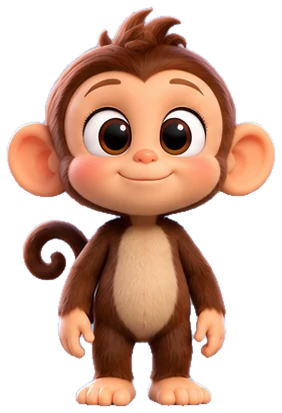
Meet Max, the monkey who always guesses 10 pence, and Tick, the mouse who checks every answer.
Watch it together
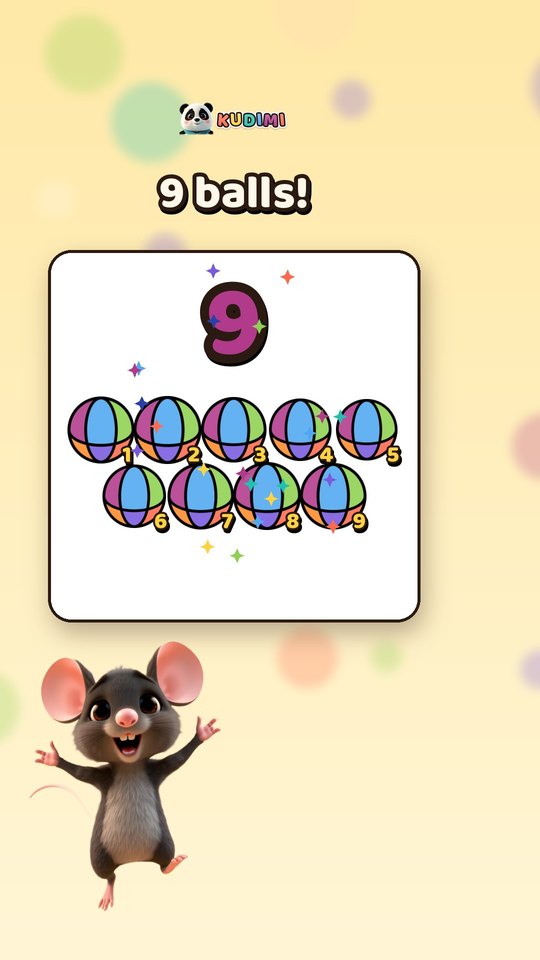
Count to 9 with Tick: How Many Balls? · YouTube
Free printables with Kudimi Family
127 activity sheets to print free in US Letter or A4, from tracing and counting to mazes and dot to dot. Kudimi Family is a free account for parents and carers.
More parent guides
- Sudoku for kids
- Screens and growing independence, ages 8 to 12
- Family game night ideas with no board games
Follow Kudimi on YouTube and Instagram. All parent guides.